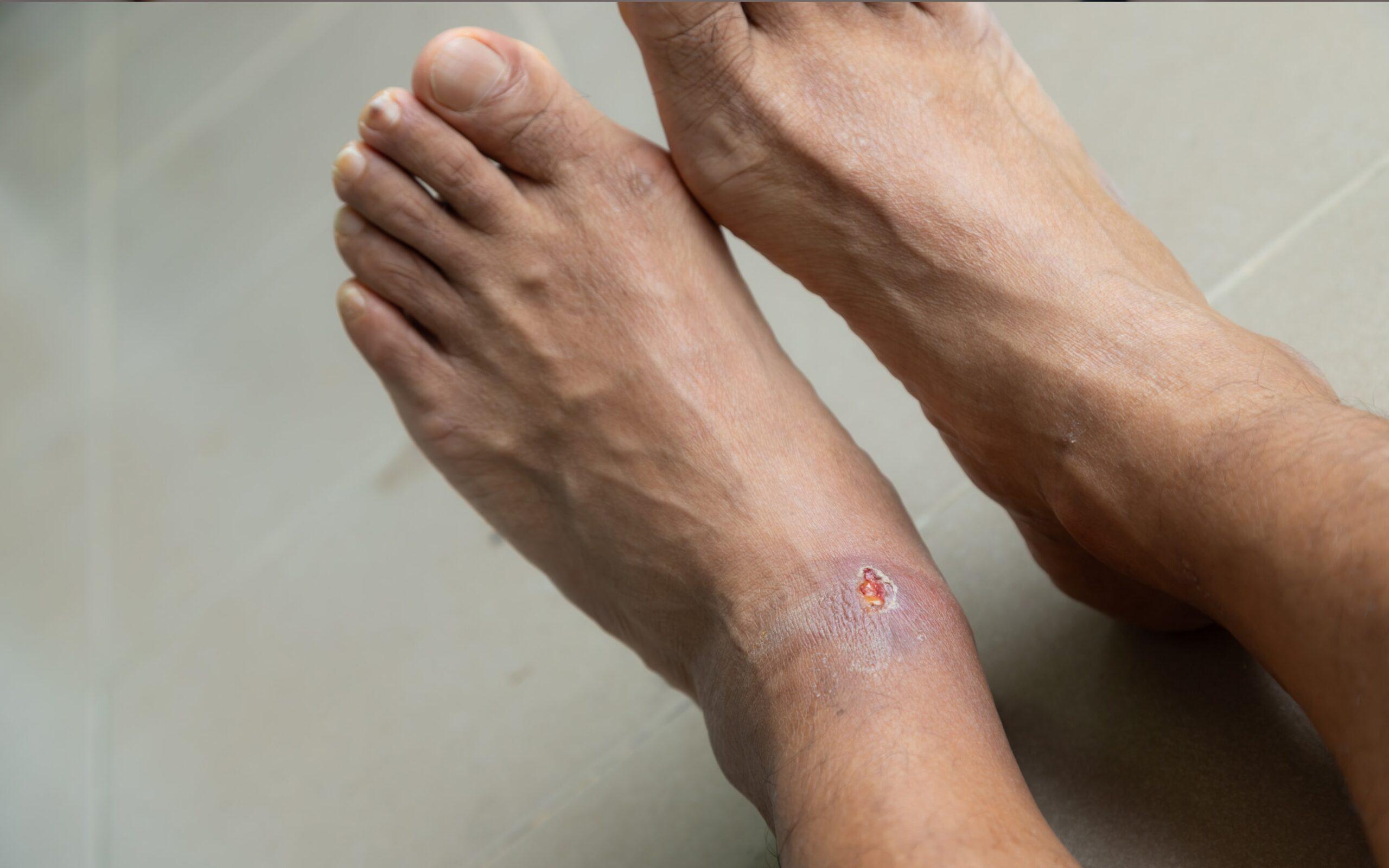
A diabetic foot ulcer is an open sore or wound that typically develops on the bottom of the foot in individuals with diabetes. These ulcers are often slow to heal due to poor circulation and reduced sensation caused by neuropathy. If left untreated, they can become infected and may lead to serious complications - including amputation.
Ulcers form when prolonged pressure, friction, or minor injuries go unnoticed due to nerve damage. Contributing factors include poor-fitting shoes, dry skin, foot deformities (like bunions or hammertoes), and walking barefoot. Impaired blood flow and high blood sugar levels further delay the healing process.
Many diabetic ulcers are painless, which makes early detection difficult. Signs may include a wound that won't heal, drainage on socks, redness, swelling, or foul odor. Your foot specialist will evaluate the ulcer’s size, depth, and signs of infection. Diagnostic tests like X-rays or lab work may be ordered to assess bone involvement or systemic infection, guiding appropriate treatment.