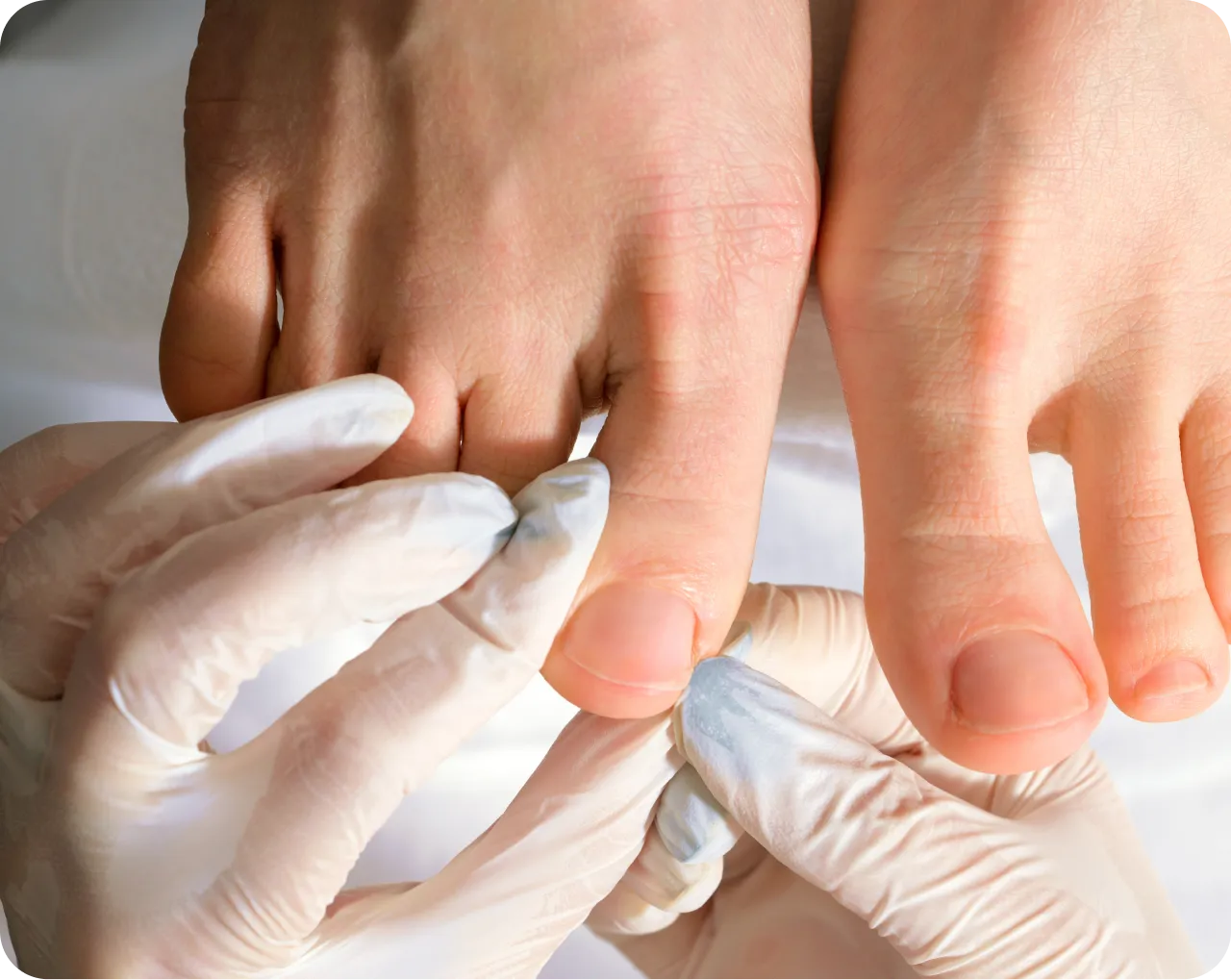
An ingrown toenail occurs when the edge of a toenail grows into the surrounding skin, causing pain, redness, and sometimes infection. This condition most commonly affects the big toe and can interfere with walking or wearing shoes comfortably.
Ingrown nails can develop from improper nail trimming, tight or ill-fitting footwear, trauma to the toe, or naturally curved nail shapes. Repeated pressure and inflammation can worsen the condition, sometimes leading to infection.
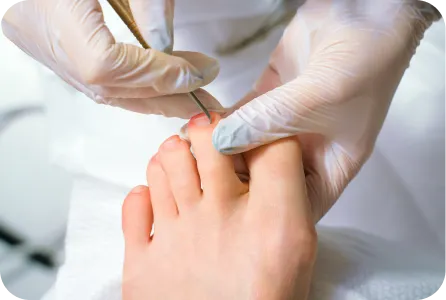
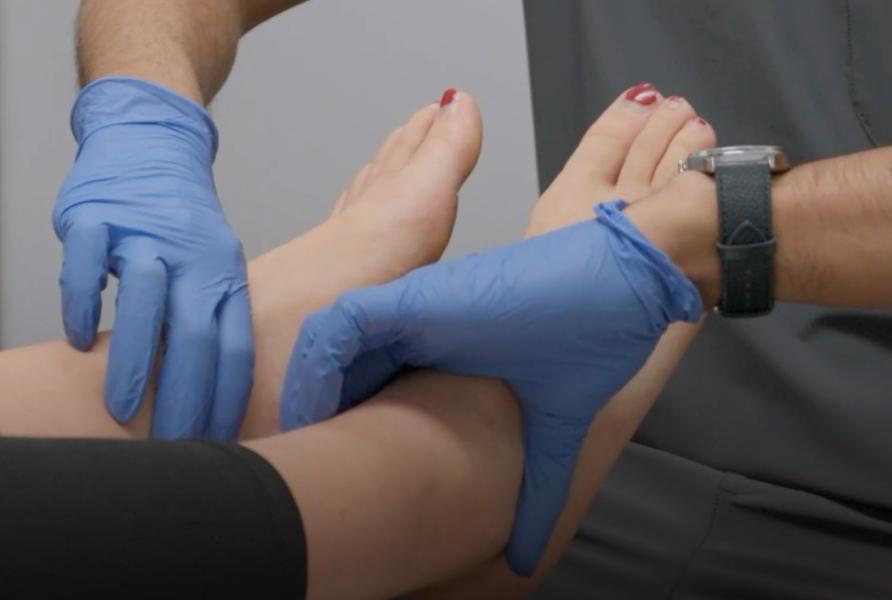
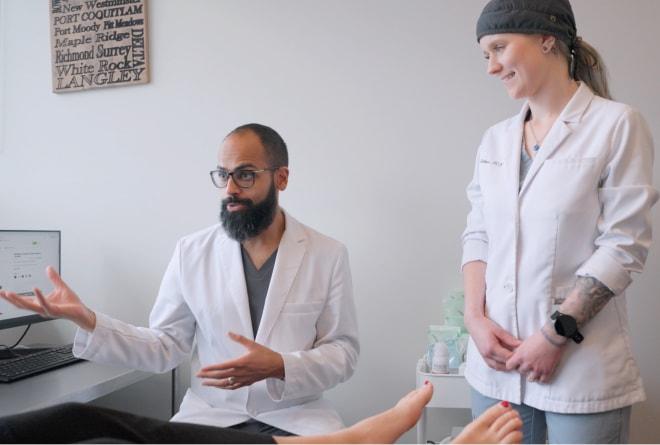
Symptoms include localized pain, swelling, redness, and sometimes drainage or pus if infection is present. Your foot specialist will examine the nail and surrounding skin to assess the severity. In some cases, an x-ray may be ordered to rule out underlying bone involvement. Treatment plans range from conservative care like soaking and nail trimming to minor surgical procedures in persistent or severe cases.
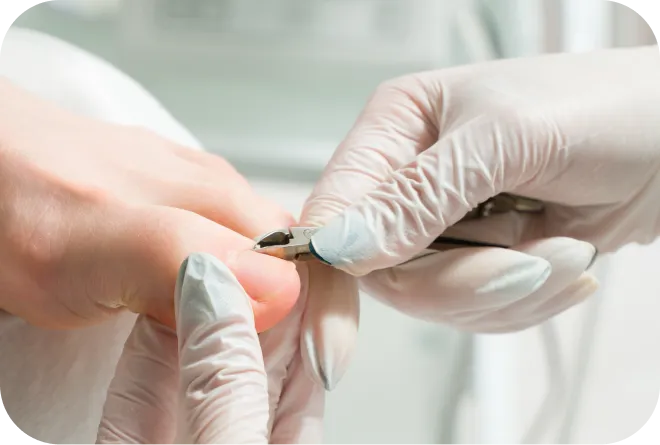

Follow after care instructions on soaking in warm water and epsom salts
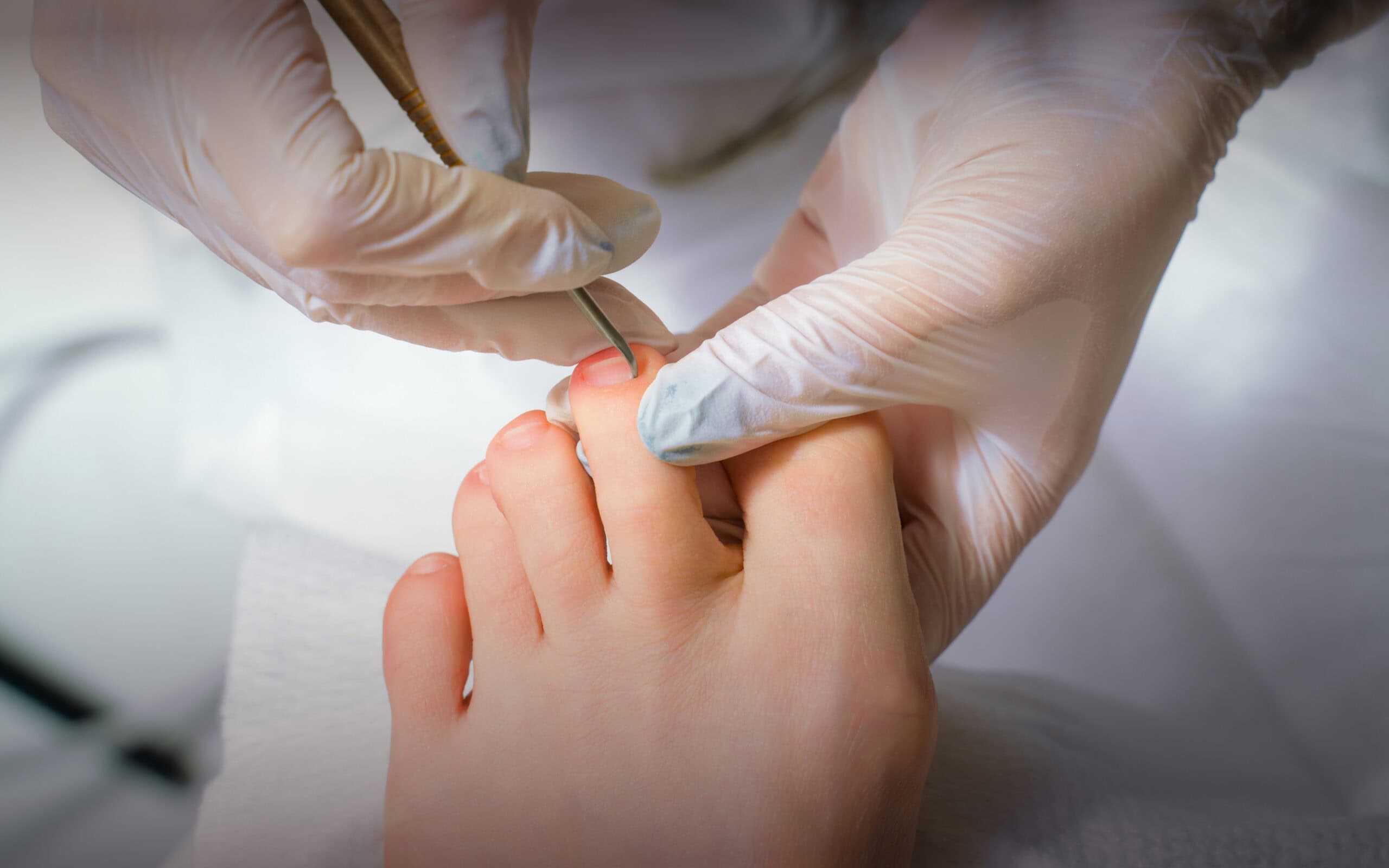
Wedge Resection with Injection or Partial Nail avulsion
Chemical Matrixectomy
Treatment depends on the severity. Mild cases may be managed with careful trimming and conservative care, while more advanced or recurring ingrown nails often require a minor in-office procedure to remove the problem edge of the nail and prevent infection.
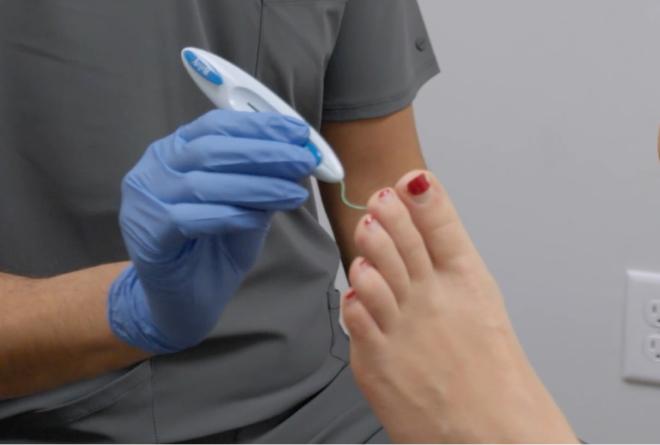
The procedure is done under local anesthetic, so patients feel little to no discomfort during treatment. To make the process as comfortable as possible, we use a cooling spray to partially numb the skin beforehand, followed by careful injection techniques that minimize pain. Most patients are pleasantly surprised at how easy the experience feels—and often notice immediate relief once the ingrown portion is removed.
If only the edge of the nail is removed (temporary procedure), the ingrown nail may return. For chronic or severe cases, a small portion of the nail root can be treated during the procedure to prevent that side of the nail from growing back, offering a long-term solution (permanent procedure).

I went in today as I had an infected ingrown toenail. Dr. Riar went into detail about what the options were to rectify this issue. He was professional, funny, and attentive to many of my concerns. After not seeing him for almost a year and a half, he was still so easy going and wanted to catch up on how things had been since last visiting. I can’t say enough about how professional he is. 5 stars is not enough! Also, the lady at the front desk is wonderful. Cheers.